Showing posts with label ethnic knits. Show all posts

Sunday, August 01, 2010

Review: Norwegian Sweater Techniques for Today's Knitter

Norwegian Sweater Techniques for Today's KnitterI love reading knitting books.   I love to write reviews of the best of these books.  Here's the latest I just finished reading.

Therese Chynoweth's first book, Norwegian Sweater Techniques for Today's Knitter, is a great example of my favorite kind of book!  You know the kind of book I mean:  packed with great techniques, great eye-candy designs, and filled with the author's passion for the art.  Chynoweth, famous for her Norwegian-inspired knitwear designs (and former designer and educator for Dale of Norway USA) has created a book that explains, step-by-step, how to work the various traditional Norwegian knitting techniques and further, how to incorporate these techniques into chic, contemporary designs.

When most folks think of Norwegian sweaters ... we instantly visualize ski sweaters from the Olympic teams, bright color-work on staid backgrounds and simple shaping to minimize distraction from the gorgeous snowflakes and other intricate color-work.  Knit in the round, with sew-and-slash to add bands or sleeves, these sweaters have stood the test of time both fashion-wise and durability-wise.  Chynoweth delves into the intricacies of these techniques, breaking them down and explaining multiple methods of obtaining the results, so that any knitter can apply these techniques to the standard Norwegian sweater.

But more than that ... the second half of the book is devoted to 20 designs that incorporate these techniques into beautiful sweaters that use color-work, cables, lace and knit-purl stitches to make gorgeous sweaters for today (these are for women, men and kids). 

This is one of those books that will stay in my personal library for reference ... design inspiration ... and just to enjoy how beautiful the knitting art truly is!

Well done, Therese!

Happy knittin'
Mary C. Gildersleeve
By Hand, With Heart -- hand-knit designs
bhwh.mary@gmail.com

Monday, March 03, 2008

Accessories: Norwegian Mail Bag

Hey y'all -- it's been a while since I posted a FO (finished object), but here is one upon which I just put the finishing touches and submitted for potential publication.
This WAS going to be a Norwegian sweater for KAL over at Ethnic Knitting -- but as I knit, the yarn told me to make it into a "mail bag" ... so I did.

This is actually knit upside-down -- the CO edge is the bag opening while the bottom is mitered to give a 4x10 square base (I cut a piece of cardboard to give it shape).I really like the way it turned out! It's a solid bit of knitting -- so won't stretch out of shape as it's used and the whole thing just looks way cool.

The strap is done like a really wide i-cord -- which I do by using three dpns and working round and round as if I were using 4 or 5 needles, on the 16 sts for the strap ... this makes a flat, double-faced strap without ever having to turn it. To keep the strap from stretching, I did a running stitch in the green to either side of the strap .... easy to keep the running stitches even by going thru every 3rd st! So, what do YOU think?
BTW, the yarn is my favorite -- Dale of Norway's Heilo in a dark charcoal grey, dark olive green, and a really nice cream. I used #3s for the knitting, which gave quite a nice fabric!

Sunday, November 25, 2007

Books: Ethnic knitting

As any of you know who read this blog even occasionally, I am a NUT for ethnic knitting! Well, I just got a book from the library which will need to be added to my knitting reference library: Cables, Diamonds, Herringbone: Secrets of Knitting Traditional Fishermen's Sweaters by Sabine Domnick. This is a recently translated from German book where Ms. Domnick has researched the patterns, designs and techniques of the traditional Guernsey (or gansey) and Jersey sweaters from the British Isles.

This book is similar to Gladys Thompson's Patterns for Guernseys, Jerseys and Arans: Fishermen's Sweaters from the British Islands or Beth Brown-Reinsel's Knitting Ganseys but Domnick's book seems clearer and easier to adapt if you'd like to design your own "traditional" sweaters.

I particularly like (and will quote often) the Celtic blessing Ms. Domnick quotes toward the end of this book:

Blessing for a Handmade Garment
May you wear the garment to shreds!
May you wear the garment to tatters!
May you wear the garment
with food and music in every place.
As I would wish:
with confidence,
with health,
with friends,
with love,
with a grace of the
Threefold Spirit.
(taken from: The Little Book of Celtic Blessings by Caitlin Matthews)

Monday, November 12, 2007

Books: the book I'd have written ...

... if I wrote a book on one of my favorite subjects: ethnic knitting!

Well, it seems Donna Druchunas wrote my book -- Ethnic Knitting Discovery: The Netherlands, Denmark, Norway and the Andes -- and did an excellent job, too! For the "get go", I like this book ... it's written on recycled paper (so it has a matte finish rather than the glossy paper everyone wants to use that is SO HARD to read unless you're at just the right angle with the light ....), the books assumes knitting knowledge and the idea that ANYONE can design their own given the proper tools.

She gives her "directions" in three ways -- the first (and my preferred way) by just giving the basic numbers and letting the knitter figure out all else, the second is for the perfectionists who want all the numbers and definite schematic before starting, and the third, a tep-by-step guide to knitting each type of sweater.

This is a great designer book -- a good overview of the history of knitting in the area, a brief bit about the usual colors or stitches used, something about how the knitting is done (special cast ons, yarn-holding, etc), and than a couple of sample sweaters.

A fabulous read on a fascinating subject ... especially useful for those who want to try designing. ENJOY!

Thursday, April 19, 2007

Knitting Book Reviews ... finally!

About a week or so ago, I promised to write up some reviews of knitting books which I've been perusing (and some, drooling over) for the past couple of weeks. So, your patience has been rewarded and here are the reviews:

The Joy of Knitting: Texture, Color, Design, and the Global Knitting Circle and The Joy of Knitting Companion: A Knitter’s Handbook by Lisa R. Myers are pretty unassuming volumes by this Pennsylvania yarn-shop owner. Don’t be fooled by the covers – both of these books have lots to offer. The first volume goes through all the aspects of knitting uniqueness – texture (through stitch patternings, yarn choice or needle choice), color (whether traditional ethnic design or random intarsia) and overall design. Myers gives great, clear explanations. The only down-side is that there are no photographs, just drawings of the suggested projects – and we all know that “artist renderings” are a bit more fanciful than the camera’s eye!

The companion book, which I actually read first, is a working notebook – with lots of blank record-keeping forms, graph paper and other helpful tools (including a needle sizer and a gauge ruler “built-into” the cover). Suggestions abound for designing your own – or adapting a have-to-have design to really fit you! I only wish they had bound the book with a spiral (rather than a glued paperback) so that the book could lie flat.

The Complete Idiot’s Guide to Knitting Projects Illustrated by Barbara Morgenroth is one of those “knitting for dummies” books that I usually don’t like. In fact, if you read the blurb about the author, you find that she has very little knitting experience but instead is a “cookbook and craft book writer”. Now surely, they could have found a KNITTING writer to write this book. That said, I found this book to have GREAT, clear illustrations and instructions, interesting projects and a wealth of information about my favorite activity! The photographs of the finished items could be better, but this would be a wonderful starter book for beginning knitters.

The Knit Kit Book by Sandy Carr, Josie May and Eleanor VanZandt is sadly out-of-print, but well worth the hunt to find a copy. This book teaches all the basics – with great illustrations and directions – as well as a whole section (or really, a second book) on designing basics including measuring, sketching, adapting existing patterns, etc. Hunt for this one – you’ll be well-pleased you did!

Knit it Now! Turn Great Yarns into Great Sweaters by Julie Montanari has some really cool designs. Also, Montanari, who’s been knitting since she was 8 (same as me!), gives ten easy steps for ensuring a good fit of the final sweater. Many of the sweaters, ironically, look like crochet (which I can do but avoid) but are so lovely that I think I’d break down and knit them!

Favorite Socks: 25 Timeless Designs from Interweave edited by Ann Budd and Anne Merrow is a must-have if you knit (or dream about knitting) socks. Talk about eye candy! This has a collection of the prettiest, coolest, most useful socks I’ve seen in a long time. There are lacy socks, hiking socks, ethnic socks and plain socks. I love Interweave books because they often spiral-bind them inside a hard cover so the books can lay flat; they are also invariably fun to read.

I love ethnic knitting. The next four books are some of the best of this kind of book:

Knitting Ganseys by Beth Brown-Reinsel is the definitive book on knitting the heavily knit-purl patterning sweaters from the British Isles. The author does a fabulous job of explaining the history of these sweaters, describing the basics of a traditional sweater and then showing the reader how to make one. She leads the reader through either a sampler sweater (doll size) or a full-size sweater so that you not only learn how to make a gansey, you learn about all the parts of the sweater and why they are made the way they are. This is a classic!

The Complete Book of Traditional Scandinavian Knitting by Sheila McGregor is another classic, this time discussing knitting from Scandinavia. History, how-tos and a plethora of lovely examples make this book one to use again and again to make these lovely hand-knits – sweaters, hats, mittens, and socks.

Simply Socks: 45 Traditional Turkish Patterns to Knit and Magnificent Mittens: The Beauty of Warm Hands are both works of art by Anna Zilboorg. Sadly, these are both OOP, but take time to search for them – you’ll never regret it. Taking the traditional patterns of Turkish knitters (where the yarn is tensioned behind the head and flicked in a very unique manner), Zilboorg has charted these gorgeous multi-colored designs and created simple socks for the sock-knitter. These are amazingly beautiful as is the text which lovingly describes the history of knitting in Turkey. Her mitten book continues this work of amazingly beautiful multi-colored designs and blends the designs in such a way as to create unique works of art. I love the long cuffs that are meant to go over the coat/jacket sleeve to keep the wearer toasty warm. Zilboorg also describes how to do three different thumb treatments on these mittens – thumb with gusset, invisible thumb and sore thumb – which can actually be interchanged on the specific designs. But one thing I like about Zilboorg’s books – she encourages the reader to go beyond her designs and create your own work of art!

Sunday, March 04, 2007

I'm a nut ...

... a nut for history of knitting type books and a nut for ethnic knitting books. Books like Sheila McGregor's Traditional Fair Isle Knitting and Traditional Scandinavian Knitting, Nancy Bush's Folk Knitting in Estonia, Marcia Lewandowski's Andean Folk Knits, as well as the Folk Knit series from Interweave that includes: Folk Shawls, Folk Socks, Folk Vests, and Folk Mittens are all well-thumbed books on my design shelf. I get lots of inspiration and great ideas from these as well as feeding my fascination with knitting old and new. I love reading these books, over and over again; each time I read them I get new ideas or learn an ancient technique that I never knew ... and my knitting is better because of these kind of books.

I just found out that a new book is coming in April -- I've actually pre-ordered it -- written by a fellow Association of Knitwear Designers member. Terri Shea has been working on a certification for museum studies and began her research on the Selbu knitting tradition in Norway. Her new book, Selbuvotter: Biography of a Knitting Tradition, contains the history of this unique cottage industry (that began with one young shepherdess tending her flock) and contains 30(!) patterns for mittens and gloves using the traditional designs of the Selbu. If you click on the link above, you can see sample pages of this fascinating work.

Go ahead (you know you want to) and pre-order this book -- should be here sometime around Easter so you can always say the Easter Bunny brought it!

Tuesday, October 17, 2006

Knitting as a form of Diplomacy

The next NATO Summit is scheduled for November in Latvia. Why would I care? Here's the reason:

Seems that the good people of Latvia -- from all over that small country, men and women all summer long -- have been knitting traditional mittens to give to the 4500 participants in the conference. The picture shows 2250 -- or half the final number.

These mittens are exquisite works of art -- they are some of the folk knitting that I think raises knitting from the plain old domestic craft to an art form. I love reading about, seeing, and trying out all forms of folk-knitting.

Here are some things that might pique your interest too:

The Renaissance of Latvia's Ethnographic Mittens

The Story of a 1000 Year Old Mitten

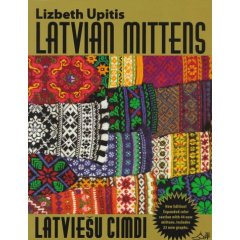
Latvian Mittens: Traditional Designs and Techniques is a fabulous book about a woman's search to find out the history of her husband's ethnic background and the knitting trail she followed. One cool thing about this book is that it is written in both English and Latvian!

Here are some excellent books about folk knitting:

Folk Bags: 30 Knitting Patterns and Tales from Around the World by Vicki Square

Folk Shawls: 25 Knitting Patterns and Tales from Around the World by Cheryl Oberle

Folk Socks: The History and Technique of Handknitted Footwear by Nancy Bush

Folk Vests: 25 Knitting Patterns and Tales from Around the World by Cheryl Oberle

Folk Mittens: Techniques and Patterns for Handknitted Mittens by Marcia Lewandowski

Andean Folk Knits: Great Designs from Peru, Chile, Argentina, Ecuador and Bolivia by Marcia Lewandowski

These are just some of the books that have fascinated me for many years. These are just the "exotic" books. There are also books about Fair Isle, Aran Islands, Bauhaus, and other ethnographic knitting styles. All are fodder for my knitting mill!

Wednesday, January 11, 2006

History of Knitting

(excerpted from www.wikipedia.com with additonal notes added)

Early origins of knitting

An exact genographical origin for knitting cannot be specified. The craft is believed to have been developed B.C., but this is disputed today. The oldest remnants of seemingly knitted pieces are those that were worn as socks. It is believed that socks and stockings were the first pieces to be produced by techniques similar to knitting as they had to be shaped in order to fit the foot, whereas woven cloth could be used for most other items of clothing. Today it is known that these early socks were worked in NÃ¥lebinding, an ancient craft which involves creating fabric from thread by making multiple knots or loops. It is done with a needle (originally of wood or bone).

The first references to true knitting in Europe were in the early 14th century, though the first knitted socks from Egypt might be slightly older. At these early times, the purl stitch was unknown; in order to produce plain knitting it was necessary to knit in the round and then cut it open. The first reference to purl stitch dates from the mid-16th century, but the knowledge may have slightly preceded that.

Knitting Madonnas

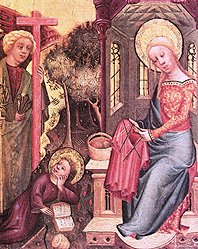
During the 14th century, pictures of the Madonna and Child Jesus showed the Blessed mother knitting – usually knitting in the round with four or five needles. Legend explains that Mary knitted the “seamless garment” for Jesus that could not be torn by the soldiers during the Passion of Our Lord – basically, Mary made a seamless t-shirt for Jesus.

Knitting Madonnas can be seen in churches and museums throughout Western Europe and date from the early 1300s through to the end of the 1400s.

Importance of Church in Knitting

The Catholic Church, primarily in Spain, helped to spread the interest in knitting through the industry of ecclesiastical garments. Knitted liturgical gloves and altar garments are some of the surviving examples of this ancient knitting. Caps – including clerical caps – that fitted to the wearer’s head were also made extensively in the past.

Elizabethan period

During this era the manufacture of stockings was of vast importance to many Britons, who knitted with fine wool and exported their wares. Knitting schools were established as a way of providing an income to the poor, and the stockings that were made sent to Holland, Spain, and Germany.
The fashion of the period for men to wear short trunks made the fitted stockings commonly used, a fashion necessity.

Queen Elizabeth the First herself favoured silk stockings, these were finer, softer and much more expensive. Actual examples of stockings that belonged to her still remain, showing the high quality and decorative nature of the items specifically knitted for her.

Guild Knittings – MEN ONLY!

In the 16th and 17th centuries, when guilds were at their height, men served an apprencticeship for six years in order to be considered “master knitters”. According to knititng historian Mary Thomas, “three years to learn, three years to travel, after which the apprentice made his Masterpieces in thriteen weeks:
1. knit a carpet … the design to contain flowers, foliage, birds and animals in natural colors (approx. size 6 ft. x 5 ft).
2. knit a beret
3. knit a woolen shirt
4. knit a pair of hose with Spanish clocks

Importance in Scottish history

Knitting was such a vast occupation among those living on the Scottish Isles during the 17th and 18th centuries that the whole family would be involved in making sweaters, socks, stockings, etc. Fair Isle techniques were used to create elaborate colorful patterns. The sweaters were essential to the fishermen of these Isles, as the natural oils within the wool would provide some element of protection against the harsh weathers while out fishing.

Many elaborate designs were developed, such as cable stitch used on aran sweaters in Ireland.

Industrial revolution

Rudimentary knitting devices had been invented prior to this period, but were one-off creations. With the advent of the Industrial Revolution wool spinning, and cloth manufacture began to be done in factories. More women would be employed at operating machinery, rather than producing their home spun and knitted items.
The consistency of the factory spun wool was better in that it was more uniform, and the weight could be gauged better as a consequence.

Knitting for Victory: 1939-1945 (and don't forget the Civil War, WWl, Desert Storm, and the War in Iraq)

Make do and mend was the title of a booklet produced by the British wartime government department, the Ministry of Information.
Wool was in very short supply, as were so many things. The booklet encouraged women to unpick any old, unwearable, woollen items in order to re-use the wool.
Knitting patterns were issued for people to make items for the Army and Navy to wear in winter, such as balaclavas and gloves. This had the effect of producing the required items, but also gave a positive sense of achievement towards the war effort, by being able to contribute in this way.

1950s and 60s high fashion

After the war years, knitting has a huge boost as greater colours and styles of yarn were introduced. Many thousands of patterns fed a hungry market for fashionable designs in bright colours.
The "twinset" was an extremely popular combination for the home knitter. It consisted of a short-sleeved top with a cardigan in the same colour, to be worn together.
Girls were taught to knit in schools, as it was thought to be a useful skill, not just a hobby. Magazines such as "Pins and needles" in the UK, carried patterns of varying difficulty, with not just clothes, but items such as blankets, toys, bags, lace curtains and items that could be sold for profit.

1980s decline

The popularity of knitting showed a sharp decline in this period in the Western world. Sales of patterns and yarns slumped, as the craft was increasingly seen as old-fashioned and children were rarely taught to knit in school.
The increased availability and low cost of machine knitted items meant that consumers could have a beautiful looking sweater at the same cost of purchasing the wool and pattern themselves.

Revival in the New Millenium

Following this decline of knitting, manufacturers and designers looked for new ways to stimulate interest and creativity within the craft.

Focus was given to making specialty yarns, which could produce beautiful and stunning results.
Companies like Vogue worked to make their patterns the height of fashion, and Rowan Yarns popularised their patterns with high-quality magazines that bore no resemblance to the old-fashioned style once produced in bulk.

Celebrities including Julia Roberts, Winona Ryder and Cameron Diaz have been seen knitting and have helped to popularise the revival of the craft. A new phrase Guerilla Knitting has been coined for the practice of taking every opportunity to knit in public - often with a degree of organisation such as a mass tube knit-in.

Even men are knitting again as seen by the emergence of male knitting groups.

Bibliography
Macdonald, Anne L., No Idle Hands: The Social History of American Knitting, 1988
Rutt, Richard, A History of Hand Knitting, 1987 (reprinted 2000)
Thomas, Mary, Mary Thomas’s Knitting Book, 1938 (reprinted by Dover Publications, 1972)